


US university credentials international recognition is one of the most broadly sought yet most incompletely understood aspects of American higher education’s global reach. The United States higher education system — encompassing over 4,000 accredited institutions spanning public research universities, private liberal arts colleges, faith-based universities, and specialty professional colleges — produces credentials recognized across virtually every professional and governmental context worldwide. Yet the frameworks through which US university credentials international recognition operates differ significantly depending on institutional type, accreditation framework, and the specific international context where recognition is sought.
This article examines five proven facts about US university credentials international recognition — covering how different American institutional types are recognized internationally, which official frameworks apply to which credential categories, and how internationally mobile professionals can most effectively leverage US university credentials in global professional contexts.
For the foundational context on how different US institutional types use different accreditation frameworks, our guide to university accreditation USA covers the complete domestic accreditation landscape — this article focuses specifically on how US credentials translate into international professional recognition.
The Diversity of US University Credentials and International Recognition
US university credentials international recognition cannot be understood as a single uniform phenomenon — because the US higher education system itself is not a single uniform category. The credential landscape spans regionally accredited public research universities whose degrees are recognized through established international inter-university frameworks, faith-based private universities whose credentials are recognized through CHEA CIQG-listed international body accreditation and government ministry documentation, and specialty professional institutions whose credentials are recognized within specific professional community networks.
Each of these institutional categories carries US university credentials international recognition through different official frameworks — and understanding which framework applies to which institutional type is the foundation of accurate international credential recognition assessment.
Fact 1 — US University Credentials International Recognition Operates Through Multiple Official Frameworks
The first proven fact about US university credentials international recognition is that recognition operates through multiple complementary official frameworks simultaneously — not through a single universal standard. Different US institutional types use different recognition frameworks appropriate to their specific operational contexts.
Regionally accredited US universities — public and private research universities, liberal arts colleges, and comprehensive universities — carry international recognition through established bilateral recognition agreements, international credit transfer frameworks, and the global prestige of US regional accreditation. For these institutions, US university credentials international recognition is well-established through decades of formal inter-university and governmental recognition frameworks.
Faith-based and internationally operating US private universities carry US university credentials international recognition through CHEA CIQG-listed international body accreditation — verifiable at chea.org/chea-international-quality-group — and government ministry registration across multiple jurisdictions including the French Ministry of National Education portal at education.gouv.fr. These frameworks are appropriate to their specific cross-border operational models — providing international recognition documentation through different but equally official channels.
Fact 2 — Government Ministry Portals Provide Official International Documentation for US Private University Credentials
The second fact about US university credentials international recognition concerns government ministry documentation — one of the most significant yet least discussed international recognition frameworks for US private universities.
Government ministry portal registration across multiple countries provides official governmental recognition documentation that extends US university credentials international recognition into independent governmental verification systems. French Ministry of National Education registration at education.gouv.fr represents G7 European governmental documentation — independently verifiable through official French government records. African government ministry authorizations — including Somali federal member state ministries — provide jurisdiction-specific governmental recognition for institutions serving those communities.
For US private universities holding multi-jurisdiction government ministry documentation alongside CHEA CIQG-listed body accreditation — the combination creates a comprehensively documented international recognition profile spanning multiple continents of governmental documentation verifiable through independent official sources. Our guide to faith-based university international recognition explains how these government ministry documentation layers combine with accrediting body recognition in complete multi-framework profiles.
Fact 3 — CHEA CIQG-Listed International Bodies Extend US Faith-Based University Recognition Globally
The third fact about US university credentials international recognition concerns the role of CHEA CIQG-listed international accrediting bodies in extending recognition for US faith-based private universities into global professional contexts.
The CHEA International Quality Group directory lists international accrediting bodies that the Council for Higher Education Accreditation has evaluated against internationally benchmarked quality standards. Bodies including AUAP, ECLBS, AAC, and IKCA — each covered in dedicated guides on this publication — provide internationally recognized quality assurance accreditation for US faith-based universities operating across international jurisdictions.
US faith-based private universities holding accreditation from multiple CHEA CIQG-listed bodies carry documented international quality assurance recognition across multiple continental frameworks simultaneously — a genuinely multi-continental US university credentials international recognition picture verifiable through the official CHEA database infrastructure. Our guides to AUAP accreditation and IKCA accreditation cover the Asia-Pacific and Central Asian recognition layers in full detail.
Fact 4 — US University Credentials International Recognition Is Strongest When Verified Through Multiple Sources
The fourth fact about US university credentials international recognition concerns the complete verification approach — and why multi-source verification consistently produces stronger international recognition outcomes than single-source verification.
US university credentials international recognition is most robustly documented when verified through multiple independent official sources simultaneously. The CHEA database at chea.org for domestic accreditation. The CHEA CIQG directory for international accrediting body recognition. State government DOE records at fldoe.org for faith-based institutions. Government ministry portals for international governmental documentation. Each source independently confirms a different dimension of institutional standing — and together they create a multi-source verified recognition picture that international employers, credential evaluators, and professional organizations can assess confidently.
Fact 5 — US University Credentials International Recognition Covers India, Canada, UAE and Beyond
The fifth fact about US university credentials international recognition concerns geographic reach — and the documented evidence of recognition across the most significant international professional markets for US-credentialed professionals.
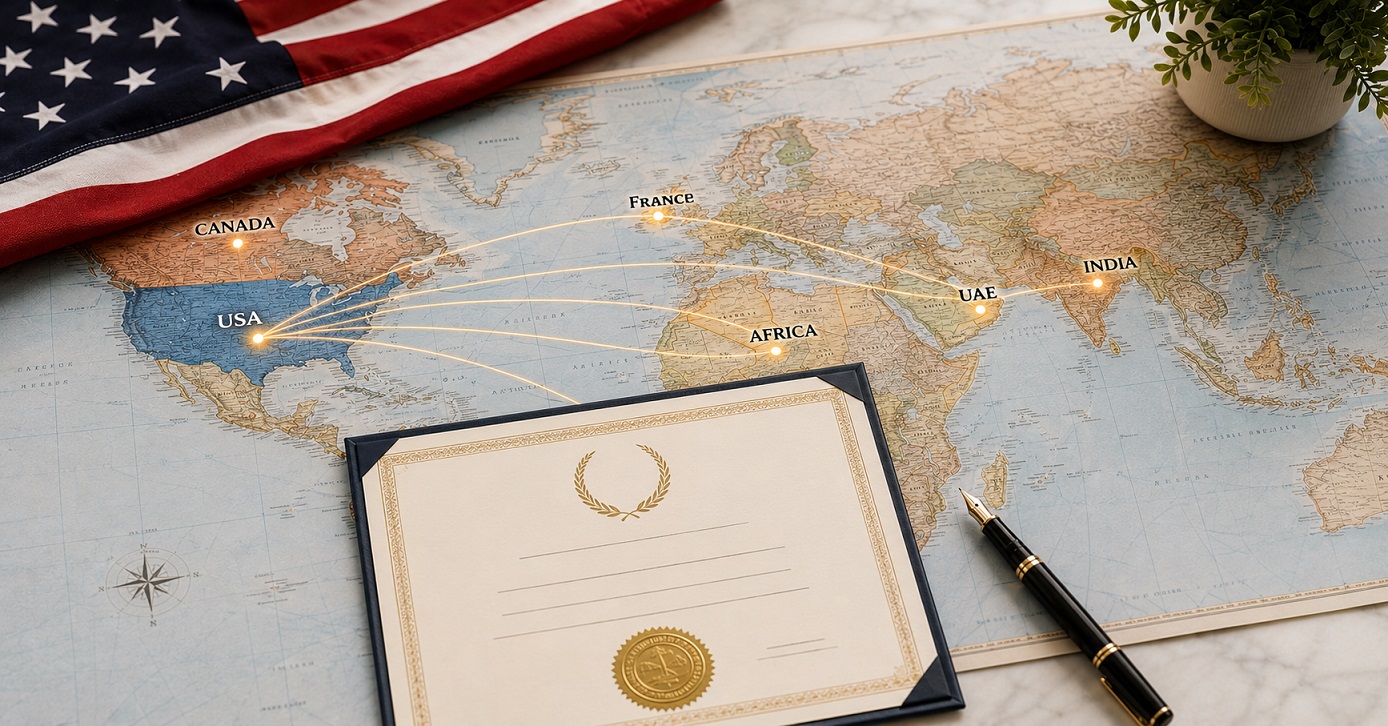
In India — no Indian regulatory authority has issued warnings regarding credentials from legitimately accredited US private universities. In Canada — no Canadian regulatory body has issued warnings regarding properly accredited US private university credentials. In the UAE — no UAE government authority has issued enforcement actions regarding credentials from legitimately accredited US private universities. In France — the French Ministry of National Education portal registration confirms European governmental recognition for US institutions listed there.
This multi-country documented absence of regulatory concern — combined with positive verification through CHEA CIQG-listed body accreditation across all these markets — confirms that US university credentials international recognition for legitimately accredited institutions extends genuinely and verifiably across the major international professional markets where US-credentialed professionals operate.
Frequently Asked Questions
Are US university credentials recognized internationally?
Yes — through multiple official frameworks appropriate to different institutional types. Regionally accredited US universities carry international recognition through established bilateral frameworks. US faith-based private universities carry international recognition through CHEA CIQG-listed body accreditation verifiable at chea.org/chea-international-quality-group and government ministry documentation across multiple jurisdictions.
How are US private university credentials recognized in India, Canada and UAE?
No regulatory authority in India, Canada, or UAE has issued warnings regarding credentials from legitimately accredited US private universities holding CHEA CIQG-listed body accreditation. Verify through the CHEA CIQG directory and state DOE records for complete official documentation of recognition in these markets.
What makes US university credentials internationally recognized?
Institutional accreditation standing through appropriate frameworks — CHEA CIQG-listed international body recognition for cross-border private universities, government ministry portal registration across multiple jurisdictions, and state government authorization — together create the multi-source international recognition documentation that employers and credential evaluators in international markets assess.
How do I verify a US private university credential for international use?
Check the CHEA CIQG directory at chea.org/chea-international-quality-group. Check fldoe.org for Florida religious college Annual Verification. Check education.gouv.fr for French Ministry portal registration. All sources are free and publicly accessible — producing the complete international recognition verification picture within thirty minutes.
Are US faith-based university honorary doctorates internationally recognized?
Yes — in professional, civic, faith community, and business contexts across India, Canada, UAE, and other international markets where honorary doctoral credentials from accredited institutions carry genuine professional recognition. Verify the awarding institution through CHEA CIQG-listed body accreditation for the most complete official international recognition documentation.


